The challenge
Europe’s energy transition is slowing down because the high‑voltage grid cannot accommodate the rapid integration of renewable energy generation and the growing electricity demand. This results in grid congestion: the transmission network is unable to transport sufficient electricity to continuously balance supply and demand. In the Netherlands, this has already placed 9,400 companies on a waiting list for new or upgraded grid connections.
Network operators could potentially transport 20–30% more electricity if they had better insights into the grid’s actual condition. However, inspections required to gather this data are complex, highly labor‑intensive, expensive, and infrequent. Current methods require disconnecting cables and sending a three‑person team on-site, which means only limited inspection data is collected. As a result, conservative assumptions must be used, causing the overdimensioned but underutilized high‑voltage network to operate below its potential.
The Solution
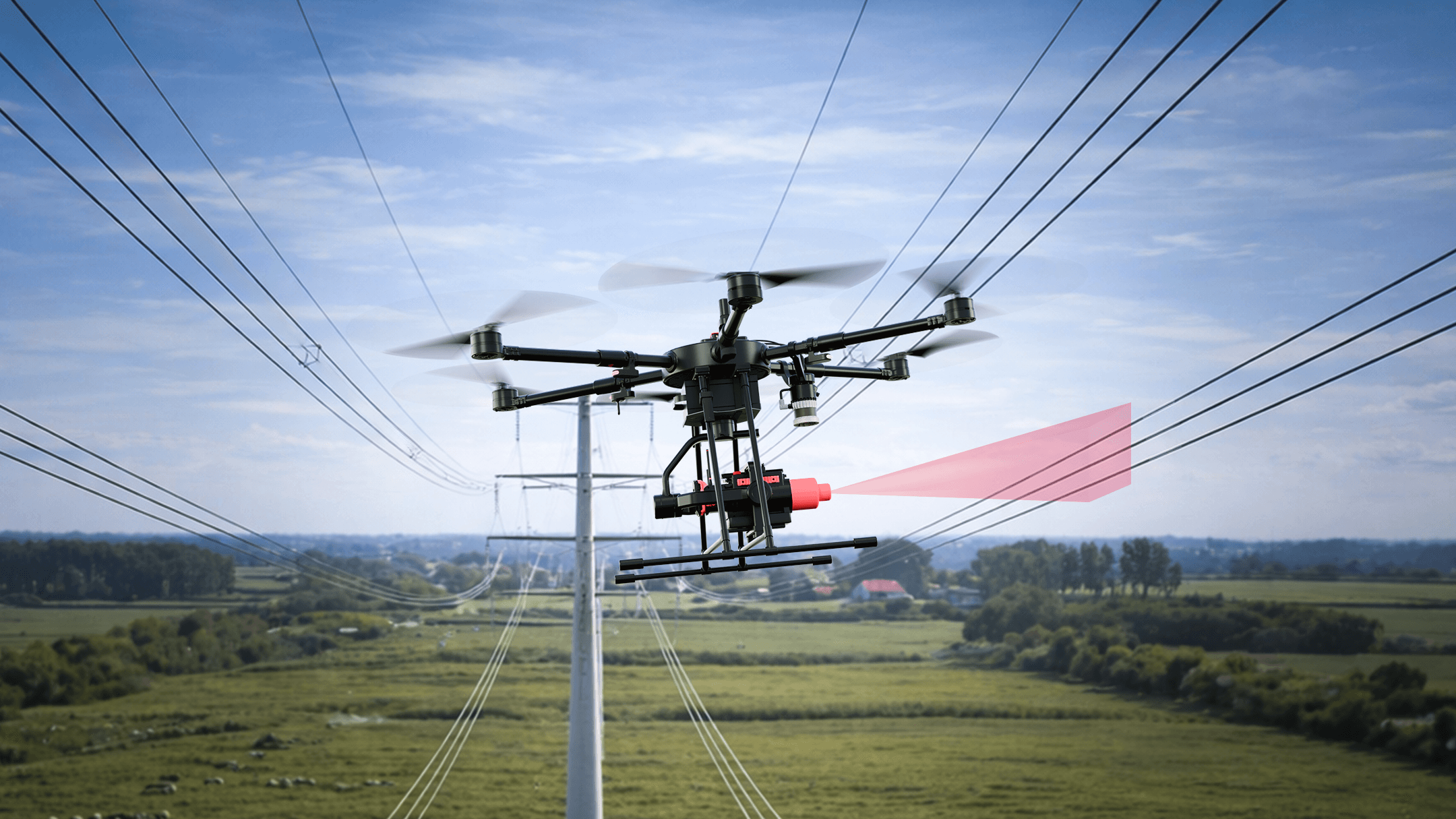
A consortium consisting of Avular, SpectX, and Eindhoven University of Technology (TU/e) will develop an autonomous drone inspection system to inspect high‑voltage cable connection points. The new approach replaces today’s once‑every‑nine‑years manual inspections that require disconnecting cables and shutting down parts of the grid.
The consortium’s system uses an autonomously flying drone equipped with a robotic arm that positions X‑ray equipment directly at the attachment point. This enables internal inspections without disconnecting the cable. AI algorithms analyze the resulting X‑ray images. The system builds on technologies the partners previously developed for wind turbine inspections.
The project aims to develop and demonstrate a high‑level prototype in a representative operational environment (TRL 6–7). Network operator TenneT provides technical support on high‑voltage infrastructure and a demonstration environment for the drone.
Subsidy program: EFRO OP Zuid
Partners: Technische Universiteit Eindhoven, SpectX
Duration: September 1, 2025 – August 31, 2028
